writer: J. Michael Straczynski
artist: Andy & Joe Kubert
I don't usually acknowledge the inker (when I wrote for Paperback Reader, I used to get to plug in the entire creative team, so maybe that's why I don't do that anymore), but in this instance it's as notable and necessary as pointing out that this is another entry in DC's Before Watchmen project.
The reason is that Andy Kubert is being inked by his father, Joe, and the difference is huge. It's the first time I'm familiar with where Andy's art ends up looking like his father's, and it's undeniably because his father's inking it, lending a huge influence to the effort that creates something distinctively familiar and new.
Much like Before Watchmen. This one is all about Nite Owl, the Blue Beetle surrogate Alan Moore created that most outsiders will probably assume is a stand-in for Batman, especially for the general look. A legacy hero (like Blue Beetle), Nite Owl is both the Minutemen's Hollis Mason and the Watchmen's Dan Dreiberg. The transition from one to the other is the crux of this issue, which portrays Dan growing up in an affluent household with a father who doesn't understand or support him, leading Dan to idolize and then seek out Hollis, who retires from the vigilante business and decides to train the eager youngster to replace him.
It's with Nite Owl perhaps that it becomes clear that Dan Dreiberg is at the center of the whole Watchmen story. Some might argue that the Comedian is, or perhaps Dr. Manhattan, but it's Dreiberg who connects two generations most clearly, and forms key relationships with the second Silk Spectre and notably Rorschach, the psycho who serves as the most colorful of these characters. It's the dynamic between Nite Owl and Rorschach, emerging in this issue, that may serve as one of the more intriguing revelations of Before Watchmen. J. Michael Straczynski writes the standard Rorschach here, and it may seem like a parody or it may prove the real strength of Moore's original vision. Perhaps we won't know until Rorschach's own book, but here he emerges as a more entertaining figure than anyone previously imagined.
There's a lot to learn in Before Watchmen, and Nite Owl may prove to be the source for the most knowledge.
Wednesday, July 11, 2012


Unbeatable Comics: Batman Incorporated #2
writer: Grant Morrison
artist: Chris Burnham
The thrust of Batman Incorporated in both of its incarnations has been that Grant Morrison would finally conclude his run on the Dark Knight, and reveal who Leviathan was. In the first volume, there was a lot of exploring the reach of Leviathan. In the second volume, we learn who Leviathan is in the first issue, and so in this effort, Morrison gets to explain why exactly Talia Head, the daughter of Ra's al Ghul and mother of Damian, the current Robin and son of Batman, took on this identity and decided once and for all to deal with the problem of her ex-lover.
I've heard the issue described as an unnecessary wikipedia retread, basically a lot of information fans already knew. If that's what it actually was, I doubt Morrison would have written it. Instead, it's a character study, something Morrison doesn't ordinarily do, at least not outright, and so it's interesting to read strictly in that regard. Talia's mother has usually been glossed over, because her father is one of Batman's most infamous foes, and how can you compete with that? Here we get an idea of the impact of being separated from her mother has on Talia, and being considered a pawn by her father, never being good enough, the product of the parenting skills that say simply getting everything you ask for is good enough. She's perhaps turned into a version of Batman whose parents weren't killed when he was a child, only one of them, and the surviving one shaped her into a weapon he had no idea what to do with. Most writers have neglected Talia as much as her father. Until the romantic liaison with Batman and the conception of Damian, she was superfluous, and continued to be until Morrison brought Damian back.
Now we see that Talia may truly be the biggest threat Batman has ever faced, a product of a continuing legacy and a writer who knows what to do with it, and that's why an issue like this is necessary, to explain all of this, and to move past it, so Morrison can continue with the story he's really working on, much as he has dipped back into the R.I.P./Final Crisis timeline a few times to fill in some gaps. This is exactly like that, except in the middle of the story he's telling. It's a crucial issue to Morrison's entire tenure with Batman.
Unbeatable Comics: Atomic Robo
Atomic Robo and the Flying She-Devils of the Pacific #1
writer: Brian Clevinger
artist: Scott Wegener
Atomic Robo Presents Real Science Adventures #3
writer: Brian Clevinger
artist: Ryan Cody, Gurihiru, John Broglia, Christian Ward
Atomic Robo is one of the greatest comic book properties almost nobody knows about. I'm not saying that it's an obscure indy title with limited budget, distribution, and awareness. It's published by Red 5 Comics, and has been nominated for the prestigious Eisner Awards. Red 5 is probably several steps below wide recognition, but it's had some cult hits on its hands, including Zombies of Mass Destruction. Anyway, Atomic Robo is like Hellboy if Hellboy wasn't so Gothic.
Brian Clevinger and Scott Wegener have been creating Atomic Robo comics since 2007, and I've tried my best to read each of the successive mini-series released along the way (as well as a series of Free Comic Book Day giveaways). Flying She-Devils of the Pacific is the seventh, and it proves beyond a doubt that this is not getting old anytime soon.
As with every Atomic Robo story, our hero stumbles into a sensational situation. This time it's a not-implausible scenario where all those weapons and stuff left behind by WWII troops in the Pacific have become subject to competing parties looking to exploit them. Robo runs into a band of, well, flying she-devils, American women who don't much care to return to their normal lives and have become pirates securing these weapons from more sinister forces looking to do evil with them. Although he's indestructible and a match for the scientific genius of those he's worked with over the decades, including creator Nikola Tesla, Robo is invariably depicted as baffled by just about everything, but game to play along, because one way or another he'll figure his way out and save the day. These are parodies of the traditional superhero archetype, but written smartly, using science in ways Mythbusters would appreciate, without knocking the reader over the head with it, perhaps more like Fringe, actually, if Walter Bishop's pet cow Bessie were a robot and did all his adventures for him.
The one thing Hellboy really has over Robo is a strong supporting cast, including the BPRD. Real Science Adventures seems to be an effort to expand on that, an anthology series with different artists working alongside Clevinger, some starring Robo and some that don't. The six-part "To Kill a Sparrow" doesn't, for instance, but it's recognizable as an Atomic Robo story all the same, set during WWII and featuring some adventurers looking to steal the Crown of Thorns back from the Nazis. The one-off "Tesla's Electric Sky Schooner" features Clevinger's version of the League of Extraordinary Gentlemen, if they were all real historic figures, and is done in manga style. The six-part "Leaping Metal Dragon" also continues this issue, with Robo attempting to learn from Bruce Lee, in ways Robo probably never considered. "Atomic Robo and the Electromatic Dream Machine" is the most surreal entry of the issue, stripping Clevinger's instincts to its most minimal approach, and is probably as good a summary of the Atomic Robo phenomenon as you'll get.
I'm always hoping Robo will get more fans, and the fact that he now has two books seems encouraging.
writer: Brian Clevinger
artist: Scott Wegener
Atomic Robo Presents Real Science Adventures #3
writer: Brian Clevinger
artist: Ryan Cody, Gurihiru, John Broglia, Christian Ward
Atomic Robo is one of the greatest comic book properties almost nobody knows about. I'm not saying that it's an obscure indy title with limited budget, distribution, and awareness. It's published by Red 5 Comics, and has been nominated for the prestigious Eisner Awards. Red 5 is probably several steps below wide recognition, but it's had some cult hits on its hands, including Zombies of Mass Destruction. Anyway, Atomic Robo is like Hellboy if Hellboy wasn't so Gothic.
Brian Clevinger and Scott Wegener have been creating Atomic Robo comics since 2007, and I've tried my best to read each of the successive mini-series released along the way (as well as a series of Free Comic Book Day giveaways). Flying She-Devils of the Pacific is the seventh, and it proves beyond a doubt that this is not getting old anytime soon.
As with every Atomic Robo story, our hero stumbles into a sensational situation. This time it's a not-implausible scenario where all those weapons and stuff left behind by WWII troops in the Pacific have become subject to competing parties looking to exploit them. Robo runs into a band of, well, flying she-devils, American women who don't much care to return to their normal lives and have become pirates securing these weapons from more sinister forces looking to do evil with them. Although he's indestructible and a match for the scientific genius of those he's worked with over the decades, including creator Nikola Tesla, Robo is invariably depicted as baffled by just about everything, but game to play along, because one way or another he'll figure his way out and save the day. These are parodies of the traditional superhero archetype, but written smartly, using science in ways Mythbusters would appreciate, without knocking the reader over the head with it, perhaps more like Fringe, actually, if Walter Bishop's pet cow Bessie were a robot and did all his adventures for him.
The one thing Hellboy really has over Robo is a strong supporting cast, including the BPRD. Real Science Adventures seems to be an effort to expand on that, an anthology series with different artists working alongside Clevinger, some starring Robo and some that don't. The six-part "To Kill a Sparrow" doesn't, for instance, but it's recognizable as an Atomic Robo story all the same, set during WWII and featuring some adventurers looking to steal the Crown of Thorns back from the Nazis. The one-off "Tesla's Electric Sky Schooner" features Clevinger's version of the League of Extraordinary Gentlemen, if they were all real historic figures, and is done in manga style. The six-part "Leaping Metal Dragon" also continues this issue, with Robo attempting to learn from Bruce Lee, in ways Robo probably never considered. "Atomic Robo and the Electromatic Dream Machine" is the most surreal entry of the issue, stripping Clevinger's instincts to its most minimal approach, and is probably as good a summary of the Atomic Robo phenomenon as you'll get.
I'm always hoping Robo will get more fans, and the fact that he now has two books seems encouraging.
Unbeatable Comics: Action Comics #11
writer: Grant Morrison
artist: Rags Morales, Brad Walker
Last issue's surprising development of Superman sacrificing his Clark Kent identity was less a stunt (see: "The Death of Clark Kent," a 90s arc, for evidence) and more Grant Morrison continuing his unique look at the Man of Steel, and now we get a little more about that, though not exactly in the "shocking reason" advertised on the cover. We already know why. This is the fallout.
In a revealing conversation with Batman, he admits that it was perhaps a rash mistake, but this is a more human, more vulnerable Superman, who is capable of overreacting. This is not so far off from the Superman of other eras, who wasn't always at the same level in his stories as he was in DC's publishing schedule. In Crisis on Infinite Earths, he's basically just another hero in the mix. It wasn't until the Man of Steel relaunch that he started to take the center of importance, culminating, arguably, in Morrison's own Final Crisis. Most writers, for many decades, have struggled to come up with stories that depict him in the godlike fashion dismissive fans have pegged on him.
Yet Morrison may be the first writer to take the actual depiction of Superman to its most logical iteration, as a guy who runs around in a t-shirt (Sholly Fisch has a typically amusing and informative backup feature about these t-shirts and their unexpected effect on the street level) and is just trying to figure things out and do the most good possible. He is now spending most of his time as Superman, which at the moment he finds refreshing, and some of it as the firefighter known as Johnny Clark. You can either dismiss this as completely temporary or enjoy Morrison's ride, because few writers are capable of this level of immersion, and fewer still with a character as supposedly daunting as Superman.
Tuesday, July 10, 2012
The 10 Best Comics of 2012 (So Far)
The following are my favorite comic books from January through June. They are not necessarily my favorite comic books being published in 2012, but the ones that have done the best work so far.
In no particular order:
Action Comics (DC)
Grant Morrison became my favorite comic book writer a little over five years ago. Before that time I tended to take him for granted, except in cases like his hypermainstream JLA, and have been trying to play catch-up ever since. Action Comics has since the New 52 launch last September been a fine example of Morrison's best instincts, presenting an iconic character in an iconic way that nonetheless presents an entirely new way to view him. No other issue besides #9 presents this so well. Outside of the regular continuity in the series to date, this issue presents an alternate reality Superman who just happens to be black, who ends up being confronted by a Clark Kent (along with Lois Lane and Jimmy Olsen) from yet another alternate reality, and forced together they challenge just about every preconceived notion of the Superman mythos, and is essential reading even if you've never cared for this character a day in your life. I promise you that you'll know about to understand what's going on, and Morrison will blow your mind.
Batman and Robin (DC)
Pete Tomasi started out as an editor at DC (so did Mark Waid) but has transitioned into one of its most crucial writers, and I think this current stint on Batman and Robin may be the point where readers really start to notice. While there's a lot of Batman comics out there, and Scott Snyder's dominates all the press, this is the one fans who care about the Dark Knight's continuing legacy really ought to be reading. I wasn't reading this one at the start of the New 52, and only stumbled into it basically by accident, even though I've loved Tomasi and Patrick Gleason since Green Lantern Corps, and once I started I had to read everything I could get my hands on. This doesn't happen to me all that often, so I knew I had found something special. Basically this is the Damian we've all been waiting for, the one who is stubbornly claiming the story as all his own, a Robin with teeth, more controversial and more essential in the role than Jason Todd could ever hope to be, and in the signature story of the year, falling into a trap set by the son of Henri Ducard, famously depicted in Christopher Nolan's Batman Begins as Bruce Wayne's original mentor (and real Ra's al Ghul, lest you forget), and clawing his way out, and even Batman doesn't quite know how to react, a story that's still unfolding.
Green Lantern (DC)
The unlikely redemption of Sinestro hit its stride in 2012 as he set about trying clean up the messes that still remained from his time leading the Yellow Corps, especially on his home planet of Korugar, and then dragging the reluctant Hal Jordan along to confront the Indigo Tribe, whose origin holds the key to unraveling the Guardians' plans for an impending Third Army. Originally I didn't understand how Geoff Johns intended to integrate Hal Jordan into his approach to Green Lantern, and this is a statement I make going all the way back to the launch of the 2006 series after Rebirth, but over time I've come to appreciate his vision as starting with a frequently rebellious and controversial member of the Corps to an expansion of the whole mythology that has developed the concept to a greater extent than any other writer in the history of the franchise. His handling of Sinestro is emblematic of this approach, rehabilitating a character who had long been dismissed as a cautionary tale turned into a generic villain, but now one of the most nuanced figures in comics. Hal becomes relevant as the one person who has the most to resent in Sinestro's new life, but also the one most likely to give him a fair shot, because he knows better than anyone that a fall from grace leads to a giant leap of faith in accepting a second chance to get it right. I've been so surprised that Johns has actually lost a lot of the momentum he had earlier in his career, in terms of critical and fan support, that perhaps the more mainstream he's become, the easier it's become to underestimate his talent. Any other writer might have stumbled in trying to figure out what his story for a franchise he's been writing for seven years will be in 2012, but Johns is still finding new ways to explore that same territory, and keep it interesting without even needing to reinvent the wheel every few years.
Justice League (DC)
The more remarkable thing about Johns is that he's not just writing Green Lantern, or even this book, or Aquaman, but has an official post in the DC front office, too, and he's not wasting his time in any of his commitments. Justice League has failed to capture the popular fanboy imagination, and like Green Lantern isn't particularly a critical darling, either, but it remains one of the best things to come out of the New 52. The truly remarkable thing is that as the series has aged since its launch last fall, it still retains an almost mythic appreciation of its central heroes, and has increasingly turned its focus to more earthbound concerns, including a villain Johns has been setting up since the beginning, who finally lost his faith in them when these superheroes couldn't, ultimately, solve every evil in the world, including those that struck his own family. There's also liaison Steve Trevor, whose growing disillusionment concerning his relationship with Wonder Woman (a classic romance most modern writers have completely forgotten about) is proving to be the true star of the book, and a guest appearance from Green Arrow that challenges our conceptions of both the original and current incarnations of the character. This is the first Justice League since Grant Morrison's that truly has legs, and if history (and more specifically his tenure with the Justice Society) is any indication, Johns is just getting started. Equally noteworthy is the Shazam backup feature, in which Johns and Gary Frank update Billy Batson as a cynical orphan struggling to accept life with a new adoptive family, including the kids who are trying to make him feel at home.
Nightwing (DC)
There've been some great runs for Nightwing since he gained his first ongoing series in 1996, but Kyle Higgins is threatening to eclipse them. He's been busy establishing himself on this book since last fall, introducing a more centralized version of Dick Grayson, grounded in his own story for perhaps the first time ever, revisiting Haly's Circus and discovering unexpected inheritance and corruption, no longer hiding from his roots in Gotham but actually embracing them, even during the midst of a nightmarish revelation that pits him at the heart of the Court of Owls, a fact Higgins and Scott Snyder might have talked a little more about, with perhaps greater results than we actually got. Still, this is the most fun I've had reading the character in years, and considering he's long been one of my favorites, I hope that's saying something.
RASL (Cartoon)
Jeff Smith's underrated (or at least, underhyped) creative followup to Bone reached its final issues this year, and there's still no telling what the conclusion this month will actually reveal about the story of Rob Johnson, a scientist who saw his life's work turn into a nightmare he decided he had to stop personally, but that ended up proving far more difficult than he imagined. There's the hopping behind parallel worlds, the girlfriend he thought he lost forever, the affair that he's been finding solace in throughout several alternate realities, and the former colleagues who will stop at nothing to thwart his efforts, believing as he can't that there's no harm in seeing his work through. For Smith, I can only say that I wish this story could last longer, that we could soak in this world(s) for many more years, but he's reached the end and if RASL is an argument for anything, it's for creative freedom, knowing how far to go, and being allowed to finish the job under the right terms.
Saucer Country (Vertigo)
Paul Cornell has been growing into one of my favorite writers for years now, and I've been waiting for him to work on a book that could truly be considered his. Saucer Country is that book. Courting the familiar tales of alien abduction, Cornell subverts expectations by not only blurring the line between perception and reality, but thrusting it into a far bigger story about politics and image, and although the book is only a few months old, it already feels like the next great Vertigo series I hoped it could be, following in the tradition of Sandman and Y: The Last Man. A lesser writer might have ended up writing X-Files stories already, but this is something Cornell has been thinking about for a long time, and it already shows, in his devotion to a linear structure that can already be considered byzantine, working on characters we're only just meeting as if they already have a rich and distinct history, leaving some critics utterly baffled, but some of us utterly enthralled.
The Secret History of D.B. Cooper (Oni)
Brian Churilla first came to my attention as an artist, but on this book he tackles writing duties as well, and taking readers on a huge leap of faith as he blends the mysterious figure of hijacker D.B. Cooper with an unlikely government assassin who travels into an alternate dimension in order to reach his targets, depicted as gruesome monsters he nonchalantly dispatches in between conversations with a talking teddy bear, all while in the real world dealing with very harsh realities he probably prefers to avoid. Given that so little is known about Cooper, any legend, no matter how outlandish, can be considered the truth, and over the years a lot of people have been fingered to be the culprit, and Churilla happens to have taken that to the extreme, using fiction at its highest potential to embrace an elusive icon who's already at the fringe of the popular imagination to hopefully elevate him still higher.
The Shade (DC)
The long-awaited followup to Starman sees James Robinson exploring the life of a reformed villain, now so thoroughly engrossed in his own narrative that it seems scarcely credible that he was ever considered anything but what he essentially is, a rogue who plays by his own rules because hardly any others apply to him. The best issues this year, #s 5-7, involve his relationship with a French vampire, La Sangre, and her own battles, a sidestep from the Shade's investigation into an attempt on his life, which has led him into the darkest secrets of his family line. This is another book I am incredulous to see get so little critical or popular attention, not the least for its pedigree or its own worth.
Wasteland (Oni)
I've only just been able to read this series again after several years of its scarce availability and inconsistent publishing schedule, but a new artist has not dulled the impact of Antony Johnston's epic vision of an apocalyptic future where the past has become both a mystery and legend and the present is dominated by religious beliefs that don't much ken to outsiders, especially when those outsiders happen to be Michael and Abi, who hold many secrets, not to mention the key to explaining everything. The story is rapidly bringing them closer to the fabled city of A-Ree-Yass-I, a destination readers have known about from the beginning, making this book that is in so many ways so similar to The Walking Dead, and in more important ways, besides far fewer readers, so different, and better, focused in a way that allows for a heartbreaking world where power rarely saves you from misery, but merely provides a temporary delusion, as the assassin Gerr discovered in #38.
Monday, July 9, 2012
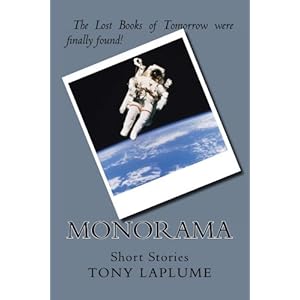
Monorama now available
Thursday, July 5, 2012
Quarter Bin #40 "The Mosaic Action Conspiracy of Superman"
ACTION
COMICS WEEKLY #s 613-14
From
August 1988:
Until
52, COUNTDOWN TO FINAL CRISIS, and TRINITY, weekly comics seemed like an
experiment that was never going to happen again. The first time was when the mother of all
comic books, ACTION COMICS, was converted to a weekly anthology title toward
the end of the 1980s, for less than a year, the first time in forty years it
didn’t star Superman exclusively. Until
recently, I had never read any of it, but had always been intrigued. Seeing Nightwing on the cover of #613 was
what convinced me to finally have a look, in an adventure captioned as “Nightwing
flies again!” The writer is Marv
Wolfman, who famously steered the course of Dick Grayson’s evolution in NEW
TEEN TITANS. For modern readers, it may
be a little difficult to imagine a time when Nightwing wasn’t established as a
viable solo figure, but that didn’t really happen for another seven years, when
the first NIGHTWING ongoing was launched.
The weird thing about this adventure is that it co-stars Roy Harper, and
is basically a Roy Harper story, featuring Cheshire, but much of the narrative
thrust is driven by Dick’s thoughts about moving on from the Batcave. The other notable story in the issues
features Hal Jordan as Green Lantern, written by Peter David, explaining how
his power ring actually removed all his fear from him. David has made most of his name writing
licensed novels on other people’s ideas, and he treats this story pretty much
the same way he writes those, putting his own ideas that don’t necessarily
configure to the established material, so that it seems like it makes sense but
doesn’t. (I used to read his Star Trek
books religiously, but gradually became disillusioned, ironically while reading
the early Excalibur books. It’s highly
unlikely that people go around routinely tearing off the antennas of Andorians
in fights, a fact that ENTERPRISE made clear several years later.) Among the other features are two-page entries
with Superman from Roger Stern and Curt Swan.
I would suggest that Swan’s Man of Steel in these pages looks about as
classical as you can get. I’d read that
layout on a weekly basis, easily. Issue
#614 features great Green Lantern cover from Mike Mignola. Makes me wish he still did DC work.
CONSPIRACY
#1 (Marvel)
From
February 1998:
I
raved about this Dan Abnett ditty recently, a discovery I made from a stack of
comics I got a decade ago but only recently sat down to read. I should amend that previous statement to say
that I raved about the second issue, and perhaps it would have been as well to
leave it at that, because the first issue is disturbingly similar, except with
a beginning that in hindsight isn’t really necessary, as Abnett treats the same
conspiracy theory about the disturbing shared origins of the most famous Marvel
superheroes in slightly different terms, which is disappointing. Given that CONSPIRACY was only two issues
long and was soundly forgotten by everyone, including any publisher who ever
knew Abnett might have written something without Andy Lanning, it’s equally
disappointing to know that the brilliance I caught the first time around really
might have been a fluke, and that’s why Abnett’s been writing with a partner
ever since. Still, I would say this is worth
a look, but if you only have time for one issue, go with the second. It even helps make THE AVENGERS and that
whole movie franchise make sense for comic book fans.
GREEN
LANTERN #17 (DC)
From
October 1991
GREEN
LANTERN: MOSAIC was a short-lived ongoing series between published 1992-93, and
the only issue I’ve ever read is the first one, and its surreal nature has
never really left my imagination.
Starring John Stewart, it was about a community of disparate alien
cultures brought together on Oa as an experiment, and thus is unlike any other
Green Lantern story that I know of. I
discovered that it had its origins in a story arc from GREEN LANTERN, in which
John and the reader are introduced to the concept (in modern comics this would
have been done back-to-back, without any awkward gap between this and the
launch of the series) and John basically gets to express his frustrations with
being a Green Lantern. (I would strongly
suggest that a future Green Lantern movie consider using him before Guy Gardner
or Kyle Rayner, even if he has to interact with Hal Jordan and make viewers
think of Tony Stark and Jim Rhodes.)
There’s few characters with enough integrity to pull off a concept like
Mosaic, and John was always the only Green Lantern for the job. These stories need to be reprinted.
SUPERMAN:
THE MAN OF STEEL #121 (DC)
From
February 2002
SUPERMAN:
THE MAN OF STEEL #133 (DC)
From
February 2003:
These
are two early Superman stories from Geoff Johns, who at the time was better
known for THE FLASH, AVENGERS, and JSA.
His later run on ACTION COMICS produced some of the most iconic Superman
stories of the modern era, but at this point he was trying to draw out the man
in the Man of Steel, like everyone else at the time convinced that Superman
needed to be justified to modern readers.
The writer who famously reinvigorated the Flash’s Rogues Gallery turned
to the Royal Flush Gang in the first of these issues, from the perspective of a
low-rung member who manages to make Superman feel bad, in a way wounding
him. That’s as much as the Royal Flush
Gang will do to him, because otherwise they’re a perennially goofy concept and
unworthy of a Superman comic. This is
probably one of their finest appearances.
In the second issue, the “Lost Hearts” story arc sees the Man of Steel
hiding out incognito in Hell’s Heart, reconnecting with Lana and more human
conflict. There’s also Traci 13, who
would later become a recurring character in the first Jaime Reyes BLUE BEETLE
ongoing. This arc was her first
appearance.
Subscribe to:
Posts (Atom)