My fourth Forbidden Geek mystery box actually is sort of my fifth. The fourth got lost in transit. Realizing it was not going to come when Forbidden Geek was setting up the next shipment, I contacted the company, which responded promptly and shipped a replacement box immediately. That was cool of them!
The resulting box had a Funko statue from Shazam! (I think it was Eugene), a copy of the Batman/Superman: Their Greatest Battles trade collection (a duplicate for me, so I earmarked it as another eventual gift for one of my nephews in Maine, whenever I get to see them and/or ship off the stuff I've been collecting for them), and the following comics:
(Nothing older than 2011 this time, but that's okay.)
Ame-Comi Girls #1 (DC)
from December 2012
The bulk of this is the Palmiotti/Gray/Palmer version of Wonder Woman's origin, with Amanda Palmer happily on art. Until, for whatever reason, a far inferior artist fills out the issue. I've mentioned before how inexplicably terrible I find the title of this series, but the contents are good.
Batman: Arkham Knight #8 (DC)
From November 2015
One of several Howard Porter covers in this selection. Even though Tomasi is writing, I don't really care about this one.
Before Watchmen: Moloch #1 (DC)
from January 2013
I love being a fan who isn't pissed off that Before Watchmen happened. I have a theory that the New 52 wasn't officially written off by fans until Before Watchmen happened. Anyway, I was very happy to see this comic in the selection, as I'm pretty sure I didn't read either issue of Moloch on original release. The creative team is J. Michael Straczynski and Eduardo Risso (a typically strong team for Before Watchmen, typically performing at peak capacity). This first issue explains Moloch's origins, how being treated as a freak (because of those ears, chiefly) led him astray, and how he entered a path of redemption. Until, y'know. At its best, Before Watchmen brilliantly expanded (rather than needlessly duplicated) Watchmen lore (here I'm thinking of Comedian, which I recently reread), and Moloch, it seems, was Before Watchmen at its best. I'm not always Straczynski's biggest fan, but this really is him functioning at peak potential.
Birds of Prey #12 (DC)
from July 2011
One of the 2011s! I'll get back to the significance of this a little later, but as for this comic: Gail Simone. I'm just not a fan.
Black Lightning: Cold Dead Hands #4 (DC)
from April 2018
Because blogging, I somehow ended up following Tony Isabella's blog. Isabella is Black Lightning's creator, and is still basically all he's known for, including his periodic revisits of the character (including a great-looking '90s run that I still want to check out). If not this issue specifically, then this mini-series was featured on his blog just before I got the box, so it was pretty fortuitous when I opened it up and found this comic. But, alas, I didn't much care about its contents. Sort of like the CW series (although it was still great to see the character finally show up in the Arrowverse during Crisis).
Earth 2 #24 (DC)
from August 2014
Still one of my favorite things from the New 52, this issue is from the Tom Taylor period (years before he wowed readers with DCeased), already proving his dynamic understanding of DC lore. This issue is pretty neat, as it features both the new Earth 2 Batman (Thomas Wayne) and Superman (Val-Zod), which sort of stole the thunder from the quasi-Justice Society but still made for fantastic developments in that continuity.
The Flash #55 (DC)
from November 2018
The other Howard Porter cover in the selection (this time a variant), featuring the budding expanded "forces" concept Josh Williamson brought to the Scarlet Speedster, sort of his version of the emotional spectrum in Green Lantern lore.
Green Lantern Corps #19 (DC)
from June 2013
The final issue in the Green Lantern family of titles before Geoff Johns' final issue of Green Lantern, as "Wrath of the First Lantern" weaves its way through them. Volthoom! Still a great name, right up there with Larfleeze. I'm not kidding! (I still want another Larfleeze series!)
Red Robin #21 (DC)
from May 2011
Tim Drake borrowing the name and costume from Dick Grayson's Kingdome Come future, but it's not all one-way, as the issue also features an appearance of a version of the red variant of his own costume Nightwing was going to sport in the New 52. Don't think I didn't notice, DC!
Superman #20 (DC)
from July 2013
Clearly DC thought this issue was going to leave a far bigger impact than it did (hyped in the "News Channel 52" feature as it was, a war between Wonder Woman's "two suitors"), as the Man of Steel clashes with Orion! But it's a fun story all the same, which makes the New Gods' lackluster presence in the New 52 all the more painful. There was such potential!
The Unwritten #29 (Vertigo)
from November 2011
I just read the two collections from The Unwritten: Apocalypse, the sequel series that ended this saga, so it was great to get a further glimpse into more of what happened previously (someday I will probably read the whole thing). But more importantly: 2011! So here it is. Just before the New 52 era, DC tried a few things to lure fans back, including "drawing the line at $2.99" and...bringing back letters columns! Which means, all three comics from 2011 featured...letters columns! DC quickly dropped them again with the New 52, which was kind of disappointing, but not before making it clear that they did have their value, a concentrated forum for fans (not angry internet people) to share knowledge and appreciation (which again, not angry internet people). I remember visiting DC's official message boards when they had switched from letters columns to the belief that the internet somehow replaced them, and that's where I found the fans hopelessly devoted the return of Hal Jordan as a clear-cut good guy (I think there was even a dorky name for the movement, but I don't remember what it would have been). I just don't think anyone realizes what's lost when there are big shifts in how things are done, that it matters that some things are lost even while other things are gained. I never understand the rush to shuck off old things, things that can't be replaced, no matter how much change improves things. On the other hand, we now live in an era where the margin for success is wider than ever, that things with a smaller audience can still thrive for years, where they would've been aborted quickly before. So the more things change, the more they stay...interesting. I bet DC brings letters columns back, again, at some point. After all, the more things change, the more they stay the same, too. Sometimes you just have to wait. Like those Hal Jordan fans.
Showing posts with label Eduardo Risso. Show all posts
Showing posts with label Eduardo Risso. Show all posts
Tuesday, December 24, 2019


Tuesday, November 4, 2014
Quarter Bin #57 "Binge-worthy II: Batman"
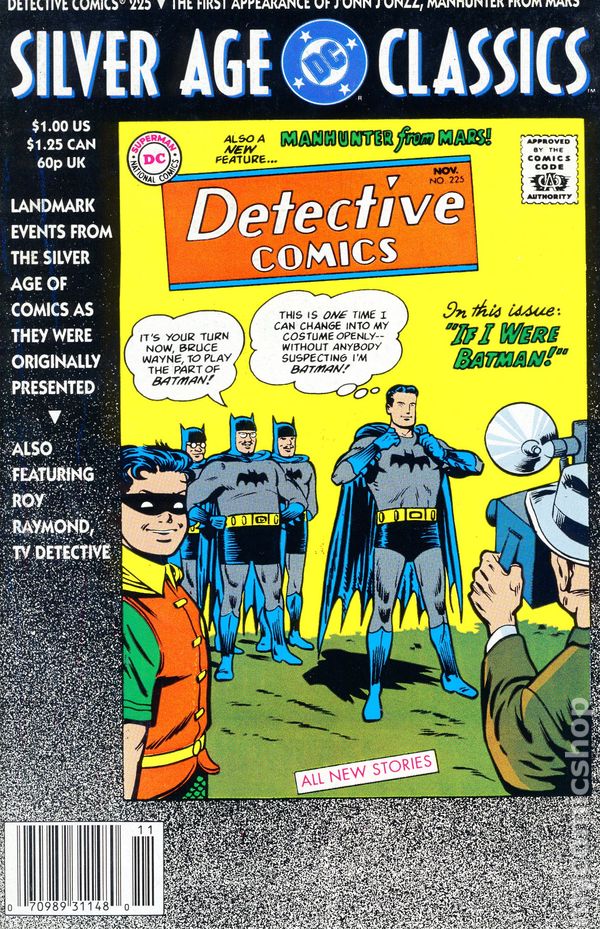
Detective Comics #225 (DC)
From 1955.
The cover story is a wacky Silver Age adventure concerning members of the public getting to be Batman for a day, which is one of those stories that made perfect sense at the time but would now require quite a bit more contextual justification. The more relevant story from the issue is the debut of Martian Manhunter! Although it might be funny to realize that he was probably intended to spend less time in his familiar green form and more in his human alter ego as, well detective John Jones. Just imagine if he'd remained that way...! The Silver Age Classics reprints were some of the first comics I ever owned, notably Showcase #22, the debut of Green Lantern Hal Jordan.
Harlan Ellison wrote this one (you, ah, might have been able to tell from the cover). For some people, he's best known for the classic Star Trek episode "The City on the Edge of Forever." In his Batman story, Batman keeps finding out he's not actually needed in any of the emergencies he comes across. It would have made for a wacky Silver Age adventure, no doubt.
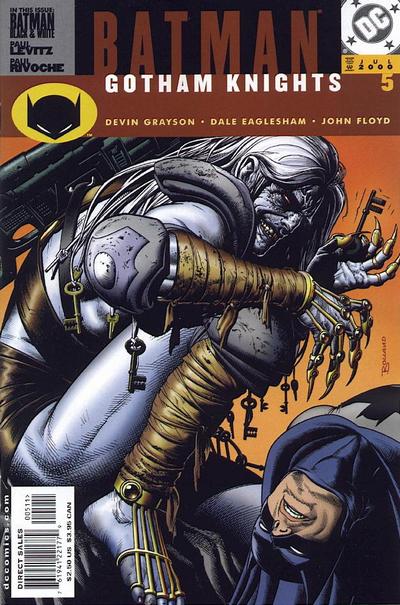
Devin K. Grayson, who sadly all but disappeared from comics nearly a decade ago, was at one time a leading writer of the Batman line, to the point where a whole series, Gotham Knights, was launched to give her a spotlight. This issue features the Key, who had last appeared in the pages of Grant Morrison's JLA. Here the depth of his psychoses are explored, a true villain who would be formidable indeed if only he could get out of his own way. The art comes from Dale Eaglesham, whom I know better from the pages of Geoff Johns' Justice Society of America. The idea behind Gotham Knights was to explore Batman in the context of his allies, and as such besides Robin there's Azrael in the story, although unfortunately the Azrael with his most terrible costume design. I have no idea what they were thinking, the more desperate DC was to keep him relevant, they actually made it easier to dismiss him. There's also a Batman: Black & White adventure from Paul Levitz featuring Commissioner Gordon.
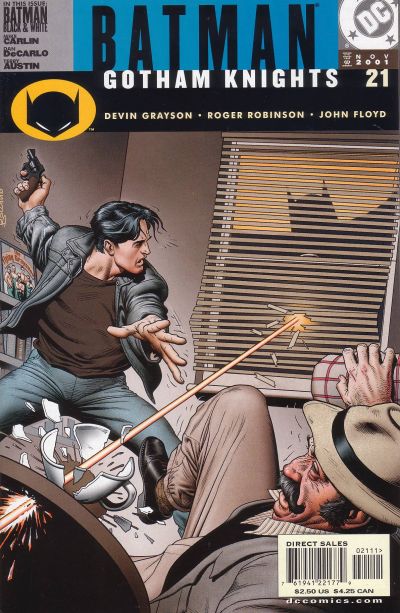
Here's Grayson again handling Dick Grayson, the character who became her true legacy, although much of what she did within the pages of Nightwing ended up being unpopular even though it followed directly in the footsteps of what Chuck Dixon had been doing before her, and both did some of the best work with the character I've read. The story involves someone trying to convince Dick that he's got a whole secret history, but as it turns out it's just a lot of manipulation (reminding me of the Star Trek: Deep Space Nine episode "Second Skin"). The idea of Dick having an aspect of his past he hadn't known about was later explored again during the recent "Night of the Owls" event. The art is from Roger Robinson, whom I usually find to be a far more pleasant presence than his general lack of reputation suggests, but he seems to have been working in a different style for the issue. The Batman: Black & White feature this time is from Mike Carlin (better known as an editor), although it's done more or less in the Bruce Timm style as featured in Batman: The Animated Series.
From 1955.
 |
| via My Comic Shop |
Detective Comics #567 (DC)
From 1986.
 |
| via comiXology |
Batman: Gotham Knights #5 (DC)
From 2000.
 |
| via DC Wikia |
Batman: Gotham Knights #21 (DC)
From 2001.
 |
| via DC Wikia |
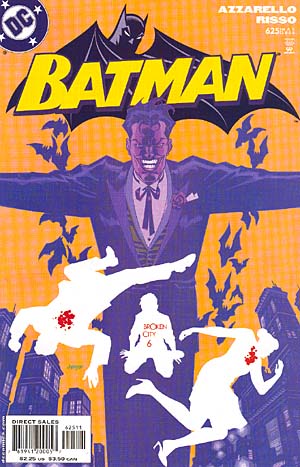
Batman #625 (DC)
From 2004.
 |
| via DC Wikia |
The conclusion to the "Broken City" arc from 100 Bullets team Brian Azzarello and Eduardo Risso reads like a preview of the Scott Snyder era, with a confrontation between Batman and the Joker that makes it clear just how obsessed with Batman the Joker really is. There's also a tribute to Julius Schwartz, legendary editor, who had just died.
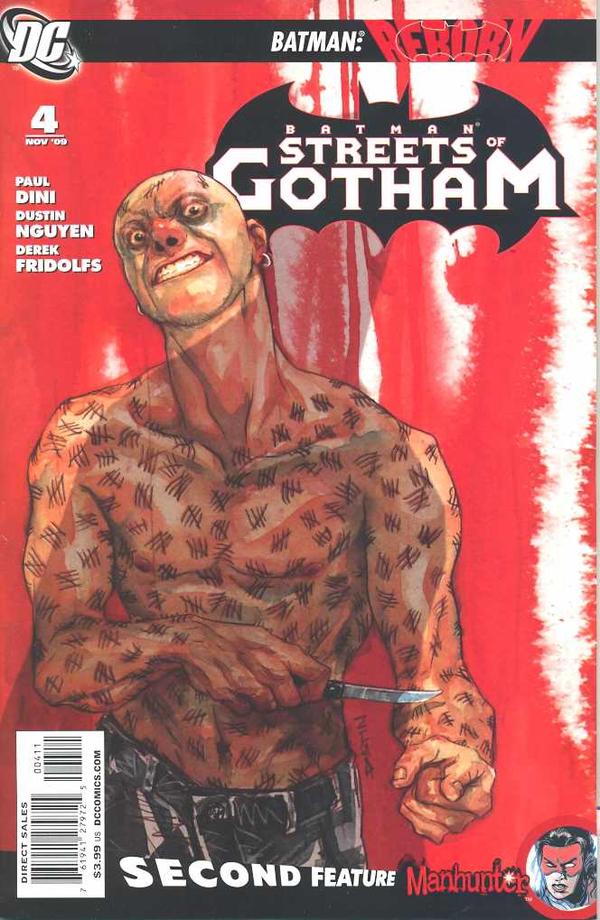
Streets of Gotham was Paul Dini's series, a highly underrated one that was better than the work he'd been doing in Detective Comics previously. Dini is best known for his collaboration with Bruce Timm in Batman: The Animated Series. Art for the issue is provided by Dustin Nguyen and Derek Fridolfs, who would keep the spirit of this initial collaboration alive within the delightful Li'l Gotham. The villain is Mr. Zsasz, the psycho best known for cutting himself for every murder he commits. This is also during Dini's Tommy Elliot arc, the underrated sequel material to "Hush," as he poses as Bruce Wayne. Marc Andreyko's Manhunter is featured in the back-up.
Batman: Streets of Gotham #4 (DC)
From 2009.
 |
| via DC Wikia |
Subscribe to:
Posts (Atom)