Checking in with a few Rebirth titles...
Detective Comics #960 (DC)
Tynion's work in this series has been well-received, and with good reason. Finally given a chance to prove he can succeed, on his own, in a Batman title, he's done it. Here he gets to handle Azrael's reintroduction, and in those scenes he's quite artful.
The Flash #28 (DC)
I think Josh Williamson's been doing a Flash renaissance in this run. I like the idea of complicating Barry Allen's usual tardiness with a reason other than heroics, because of a twist to his speed. Seems like something Mark Waid would've done. That's as high a compliment as I can give.
Super Sons #7 (DC)
This is the first issue of the series I've managed to catch, but I think Tomasi has absolutely made good on the concept. If anything, it seems more natural than his and Gleason's Superman. Even if the Teen Titans take up considerable real estate in the issue, clearly Jon and Damian are the stars. Actually, the only thing capable of rivaling their appeal is the shock at seeing Jorge Jimenez's art, which clearly has evolved since I last saw it in Earth 2: Society. In a good way!
Trinity #11 (DC)
This was Francis Manapul's final issue as writer/artist of the series, and it's sad to see him go. Although, whatever's going on with the art, he seems to have lost the essence of what that aspect of his output so distinctive, and that was kind of sad to see, too.
Showing posts with label Francis Manapul. Show all posts
Showing posts with label Francis Manapul. Show all posts
Monday, September 18, 2017


Monday, June 5, 2017
Quarter Bin 102 "Road to Flashpoint"
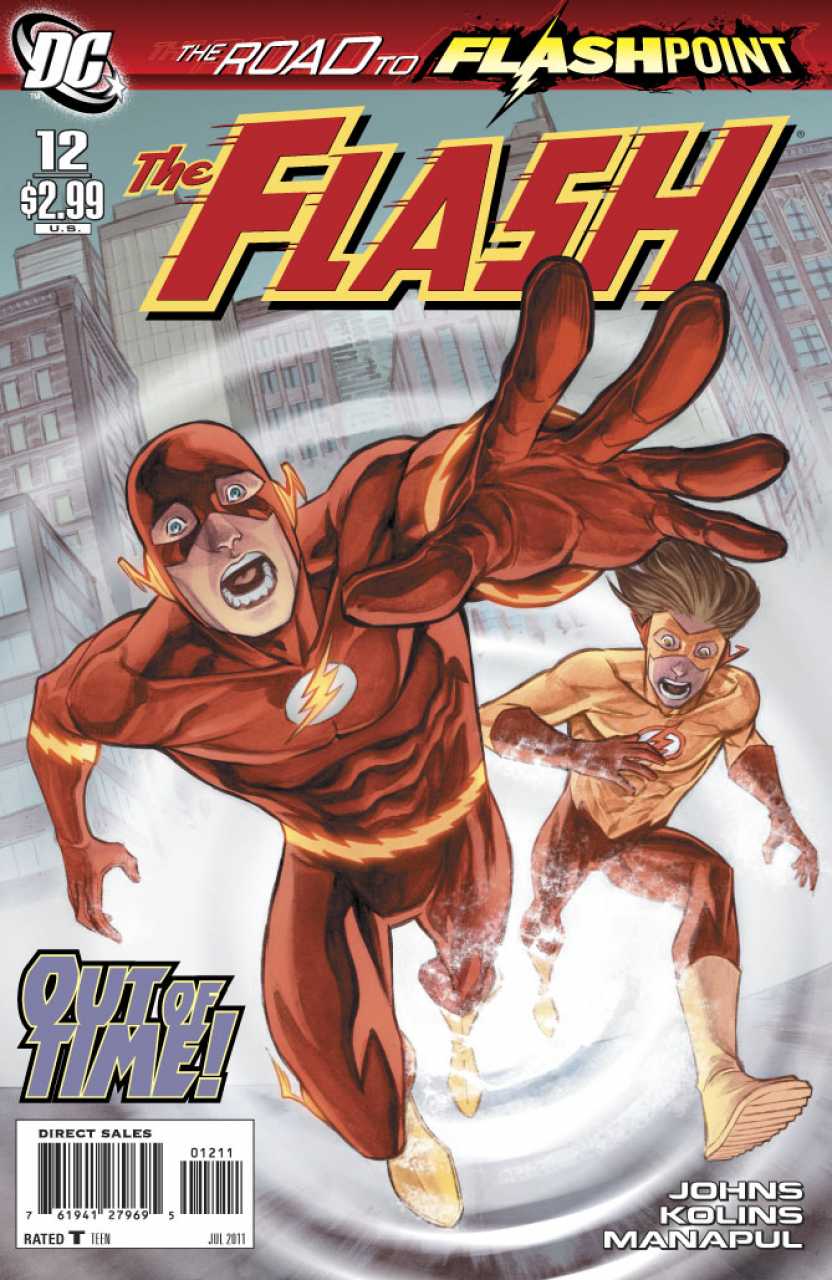
Flashpoint was a seminal comics moment for me, and it remains one of my happiest memories and favorite stories. I'd been bummed that Geoff Johns started writing The Flash again, only to end after twelve issues, but I never got to finish reading those issues until now. Of course, I was happy once I read Flashpoint, and even happier about his New 52 work (Justice League and Green Lantern were highlights of many a year), so I gave up being upset that these were the final issues.
The Flash #10-12 (DC)
from June, July 2011.
Drawn by Scott Kolins (who'd done a lot of Johns's Wally West Flash series) and Francis Manapul (who'd launched this one with Johns, and would lead the New 52 reboot), these are "Road to Flashpoint" stories that teased a character called Hot Pursuit, who turned out to be Barry Allen from an alternate reality (he probably needs to return at some point, despite his fate here), only to feature the return of Eobard Thawne, the Reverse-Flash, ahead of his role in Flashpoint.
There's a strong emphasis on Bart Allen who I enjoyed reading so much in the '90s as Impulse but who Johns transformed into Kid Flash in the pages of Teen Titans, which was nice. The new 52 version of the character totally revamped the concept, which angered a lot of fans, but I never let it bother me.
Ironically, this was the last time DC had letters in its comics, and in the last two issues apparently Flash finally joined the bandwagon, only for the idea to go away again and never (so far) return.
Friday, April 15, 2016
Reading Comics 184 "Darkseid War, Superman: America Alien, Omega Men, Web-Warriors"
Justice League #47, 48, Special #1 (DC)
Okay, so the word ought to be ought by this point that Justice League #50 will finally give a definitive answer as to who is the Joker. Because that's going to happen. So I dove back into Darkseid War. The original plan was to eventually read the whole thing in trade collection, because this is one of the biggest stories Geoff Johns has ever done (which is saying something), building on just about everything he's done in this series, including Forever Evil, and arguably telling a definitive New Gods tale in the process. With various members having taken over various New Gods facets in the wake of Darkseid's death, they come to the realization that the Crime Syndicate (as Lex Luthor realized immediately) will probably have to play a role in this, and by the end have actually decided to team up with their doppelgangers. (It's worth noting that the animated Justice League: Crisis on Two Earths is actually pretty good.) In the Special, Johns gets to write a Jessica Cruz (Power Ring) tale, more or less riffing on what he's already done in the series proper, but still fun for fans of his Green Lantern to see (it's also worth noting that his two creations, Cruz and Simon Baz, finally helm their first ongoing series, thanks to the upcoming Rebirth era, in Green Lanterns). But more importantly, and also slightly riffing on earlier material, Special also puts the spotlight on Grail, and as such is another essential issue for those who realized that Johns has been using Justice League as his first run with Wonder Woman. And may he have another...
Omega Men #3 (DC)
And thusly now do I have physical copies for all extant issues of this series. In this one, Tom King explores Princess Kalista's motivations, which at the time seemed all the more crucial because she had the most immediate relationship with Kyle Rayner, and this was the first time the series delved into a team member's back story, but certainly not the last. The William James quote? "The 'sentimental fallacy' is to shed tears over abstract justice and generosity, beauty, etc., and never to know these qualities when you meet them in the street, because the circumstances make them vulgar." Again, I love these quotes in the series. Clearly Kalista was used to win Kyle over, because she's a romantic figure, enough to make him begin to care, when the rampant chaos of the Vega System itself was never enough. I hope comics fans eventually come around and realize how significant King's work in this series really is...
Web-Warriors #5 (Marvel)
I had to read at least one issue of this series, right? It's a de facto continuation of Mike Costa's work from the Secret Wars Spider-verse mini-series, which is to say, more with all those Spider-Man variations running amok together. What strikes me, in reading this, is that Costa is completely at home in this chaos. I guess it took a while for me to reconcile this version of his writing with the more sober work I know best, but if it gets him more fans and maybe even regular work, then I can support that. Maybe not read it regularly myself, but clearly there are readers for this sort of thing, so I can't complain. Happy for the guy...
Superman: American Alien #2, 4, 5 (DC)
I read the first issue digitally, and I was impressed with this latest variation on Superman's origins. Every issue spotlights a different period of Clark Kent's formative development. The second issue, for instance, features Max Landis' take on the period featured in Smallville, the teenage Clark figuring out what to do with his powers. Each issue features a different artist. This one has Tommy Lee Edwards, in a style you'd not typically associate with Superman, more like Ed Brubaker's crime comics, say. The fourth issue features budding journalism, with Clark, and Lois, covering the media coverage of emerging moguls Oliver Queen (post-island), Lex Luthor, and the elusive Bruce Wayne (who was previously featured in the third issue). This is my favorite issue so far, and not just because of the typically lush Jae Lee art. Here's a quote from Luthor:
Anyway, Landis has some big, brainy thoughts in mind, perfectly in-character, too, and his work speaks to the enduring strength of revisiting familiar stories, no matter how familiar we think they are, or how familiar we think we are with the players. Young Luthor is always as fascinating as Mature Luthor, and in the hands of someone like Landis, Young Clark is arguably more fascinating than his mature counterpart. His first encounter with Batman, in this version, inspires him to become Superman. And so the fifth issue is all about his first, unsure attempt at being a superhero, like the Landis version of Frank Miller's famous Batman: Year One. And it's fantastic. The whole Blur thing from Smallville always seemed half-considered to me, a placeholder. As depicted by Francis Manapul, in arguably his best work to date, the Landis version seems like it always existed. Well, now it always will...
Okay, so the word ought to be ought by this point that Justice League #50 will finally give a definitive answer as to who is the Joker. Because that's going to happen. So I dove back into Darkseid War. The original plan was to eventually read the whole thing in trade collection, because this is one of the biggest stories Geoff Johns has ever done (which is saying something), building on just about everything he's done in this series, including Forever Evil, and arguably telling a definitive New Gods tale in the process. With various members having taken over various New Gods facets in the wake of Darkseid's death, they come to the realization that the Crime Syndicate (as Lex Luthor realized immediately) will probably have to play a role in this, and by the end have actually decided to team up with their doppelgangers. (It's worth noting that the animated Justice League: Crisis on Two Earths is actually pretty good.) In the Special, Johns gets to write a Jessica Cruz (Power Ring) tale, more or less riffing on what he's already done in the series proper, but still fun for fans of his Green Lantern to see (it's also worth noting that his two creations, Cruz and Simon Baz, finally helm their first ongoing series, thanks to the upcoming Rebirth era, in Green Lanterns). But more importantly, and also slightly riffing on earlier material, Special also puts the spotlight on Grail, and as such is another essential issue for those who realized that Johns has been using Justice League as his first run with Wonder Woman. And may he have another...
Omega Men #3 (DC)
And thusly now do I have physical copies for all extant issues of this series. In this one, Tom King explores Princess Kalista's motivations, which at the time seemed all the more crucial because she had the most immediate relationship with Kyle Rayner, and this was the first time the series delved into a team member's back story, but certainly not the last. The William James quote? "The 'sentimental fallacy' is to shed tears over abstract justice and generosity, beauty, etc., and never to know these qualities when you meet them in the street, because the circumstances make them vulgar." Again, I love these quotes in the series. Clearly Kalista was used to win Kyle over, because she's a romantic figure, enough to make him begin to care, when the rampant chaos of the Vega System itself was never enough. I hope comics fans eventually come around and realize how significant King's work in this series really is...
Web-Warriors #5 (Marvel)
I had to read at least one issue of this series, right? It's a de facto continuation of Mike Costa's work from the Secret Wars Spider-verse mini-series, which is to say, more with all those Spider-Man variations running amok together. What strikes me, in reading this, is that Costa is completely at home in this chaos. I guess it took a while for me to reconcile this version of his writing with the more sober work I know best, but if it gets him more fans and maybe even regular work, then I can support that. Maybe not read it regularly myself, but clearly there are readers for this sort of thing, so I can't complain. Happy for the guy...
Superman: American Alien #2, 4, 5 (DC)
I read the first issue digitally, and I was impressed with this latest variation on Superman's origins. Every issue spotlights a different period of Clark Kent's formative development. The second issue, for instance, features Max Landis' take on the period featured in Smallville, the teenage Clark figuring out what to do with his powers. Each issue features a different artist. This one has Tommy Lee Edwards, in a style you'd not typically associate with Superman, more like Ed Brubaker's crime comics, say. The fourth issue features budding journalism, with Clark, and Lois, covering the media coverage of emerging moguls Oliver Queen (post-island), Lex Luthor, and the elusive Bruce Wayne (who was previously featured in the third issue). This is my favorite issue so far, and not just because of the typically lush Jae Lee art. Here's a quote from Luthor:
"There's a fatalism that's been going around, and I think it's toxic -- self-fulfilling. I think fatalism is hip and pragmatism has gotten boring. I think dark futures are paradoxically easier to see than bright ones. Everyone talks about the problems of tomorrow, the apocalypse of next week, but whatever happened to the man of tomorrow? Why are we so convinced there aren't those among us who could maybe solve these problems that seem so insurmountable to the pseudo-intellectuals who pose them? We scared to even talk about a hopeful future, because we're terrified it won't come to light."
Anyway, Landis has some big, brainy thoughts in mind, perfectly in-character, too, and his work speaks to the enduring strength of revisiting familiar stories, no matter how familiar we think they are, or how familiar we think we are with the players. Young Luthor is always as fascinating as Mature Luthor, and in the hands of someone like Landis, Young Clark is arguably more fascinating than his mature counterpart. His first encounter with Batman, in this version, inspires him to become Superman. And so the fifth issue is all about his first, unsure attempt at being a superhero, like the Landis version of Frank Miller's famous Batman: Year One. And it's fantastic. The whole Blur thing from Smallville always seemed half-considered to me, a placeholder. As depicted by Francis Manapul, in arguably his best work to date, the Landis version seems like it always existed. Well, now it always will...
Saturday, November 29, 2014
Quarter Bin #61 "Binge-worthy VI: Martian Manhunter and other curiosities"
Martian Manhunter: American Secrets #1 (DC)
From 1992.
I've long been interested in having a look at this one. I'm a huge fan of Martian Manhunter, one of the most perfect comic book creations ever and yet strangely one of the least-utilized DC icons, usually depicted as a stalwart member of the Justice League. The launch of Grant Morrison's JLA put an extreme spotlight on all of the characters he chose to include, which led to the only, to date, Martian Manhunter ongoing series, which lasted for three years, at the turn of the millennium. As indicated in his first appearance, previously featured in the "Binge-worthy" series here, the erstwhile John Jones was likely intended to be more of a detective than the green-skinned superhero he otherwise was. With so many parallels to Superman and even the X-Men, Manhunter has always been a true outsider capable of providing a unique perspective on humanity. American Secrets was an effort to do exactly that from a Cold War perspective, circa his earliest print history, the way some people still associate Wonder Woman with WWII even though she's been contemporized since her debut, unlike Captain America. This is a noir story that doesn't even feature the green skin, much less cape (this is an alien who looks alien but is also a shape-shifter, so he can manipulate his appearance any number of ways, including a rough approximation of human, which is how he's usually depicted, and then an accurate version, which is how J'onn J'onzz becomes John Jones, the ultimate assimilated immigrant) until late in the first issue from the old "prestige format" (basically serialized graphic novel). Maybe this particular line of dialogue, from our detective, sums up the project:
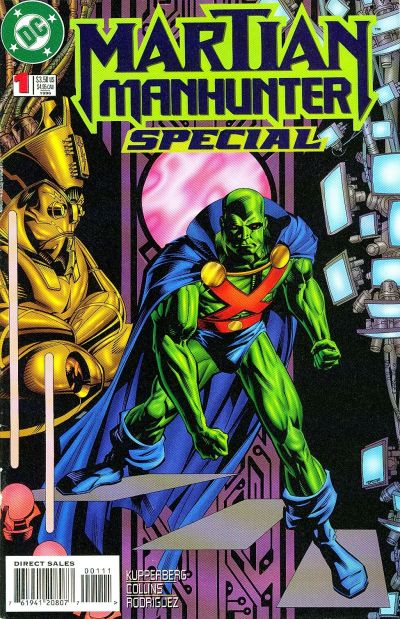
Martian Manhunter Special (DC)
From 1996.
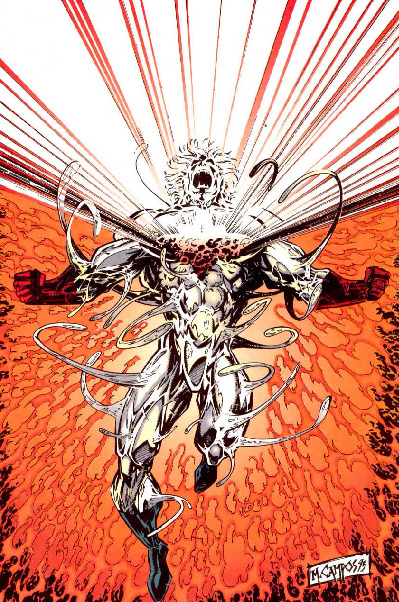
This was a one-shot released just prior to the Morrison reboot, replete with pin-ups featuring the characters who were Leaguers at the time and about to be become irrelevant. My two favorites are the Marc Campos Captain Atom (the artist was familiar with the character from the "Judgment Day" crossover and the early issues of Extreme Justice)
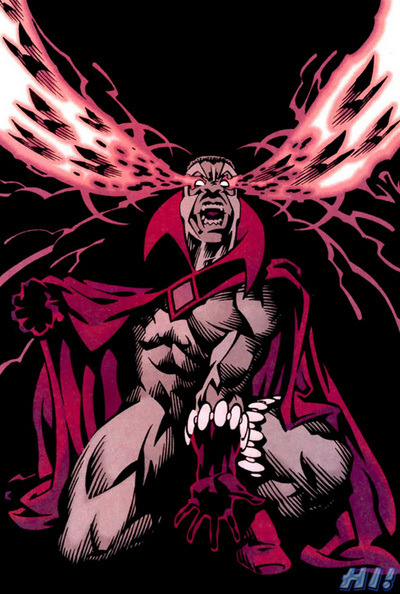
and my boy Bloodwynd
who funny enough was at one point mistaken to be a version of Martian Manhunter thanks to some hilarious confusion. Why am I talking about the pin-ups rather than the comic itself? Because the story is pretty generic superhero sci-fi. The cover, meanwhile, is more art I'd rather talk about, featuring work from Howard Porter, who helped Morrison launch JLA, and so probably represents the chronological launch of the relaunch, moreso than the one-shot itself.
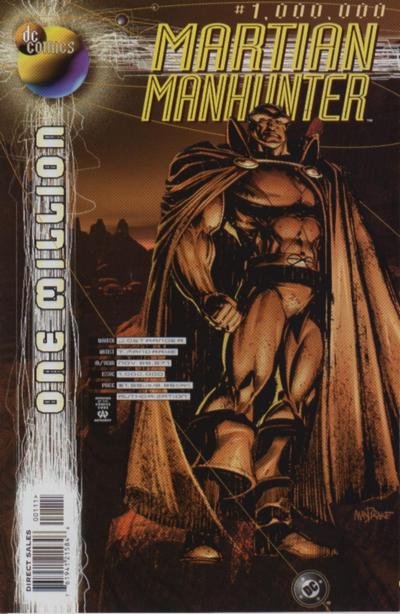
Martian Manhunter #1,000,000 (DC)
Speaking of Morrison's JLA, the event that spun out of it (the '90s were a decade that spun events out of series or creative teams DC wanted to spotlight; as such Dan Jurgens with Zero Hour in the wake of "Doomsday;" Mark Waid with Underworld Unleashed in the wake of his early Flash success; Karl Kesel and Stuart Immonen with The Final Night in the wake their Adventures of Superman; John Byrne with Genesis in conjunction with his Jack Kirby's Fourth World; and Geoff Johns with Day of Judgment on the cusp of taking over DC entirely) was called DC One Million, which was previously referenced in the "Binge-worthy" series concerning The Creeper. Martian Manhunter was another character who greatly benefited from the event creatively, with regular series creators John Ostrander and Tom Mandrake exploring his adventures across thousands of years until he inhabits Mars itself. It's another bold example of what sets the character apart and a welcome reminder of the undervalued work Ostrander and Mandrake did on the series, sort of the Brian Azzarello/Cliff Chiang Wonder Woman of its day, maybe not what JLA fans might have expected but some of the best character work of that time from an era that was steeped heavily in character work (Waid's Flash, James Robinson's Starman).
From 1992.
 |
| via Comic Book Resources |
"...But not an evidence trail. A trail of references, and hunches. Game-shows, lizard-headed devils. Comic books..."I'd love for something like this to be reprinted, and for Martian Manhunter himself, for all intents and purposes, to be rediscovered. If Ed Brubaker ever came back to DC, this is exactly the character he should write. The same goes for Jason Aaron. Heck, bring them both back and we can have a whole Martian Manhunter renaissance...
Martian Manhunter Special (DC)
From 1996.
 |
| via DC Wikia |
 |
| via Tumblr |
 |
| via Tumblr |
Martian Manhunter #1,000,000 (DC)
From 1998.
 |
| via DC Wikia |
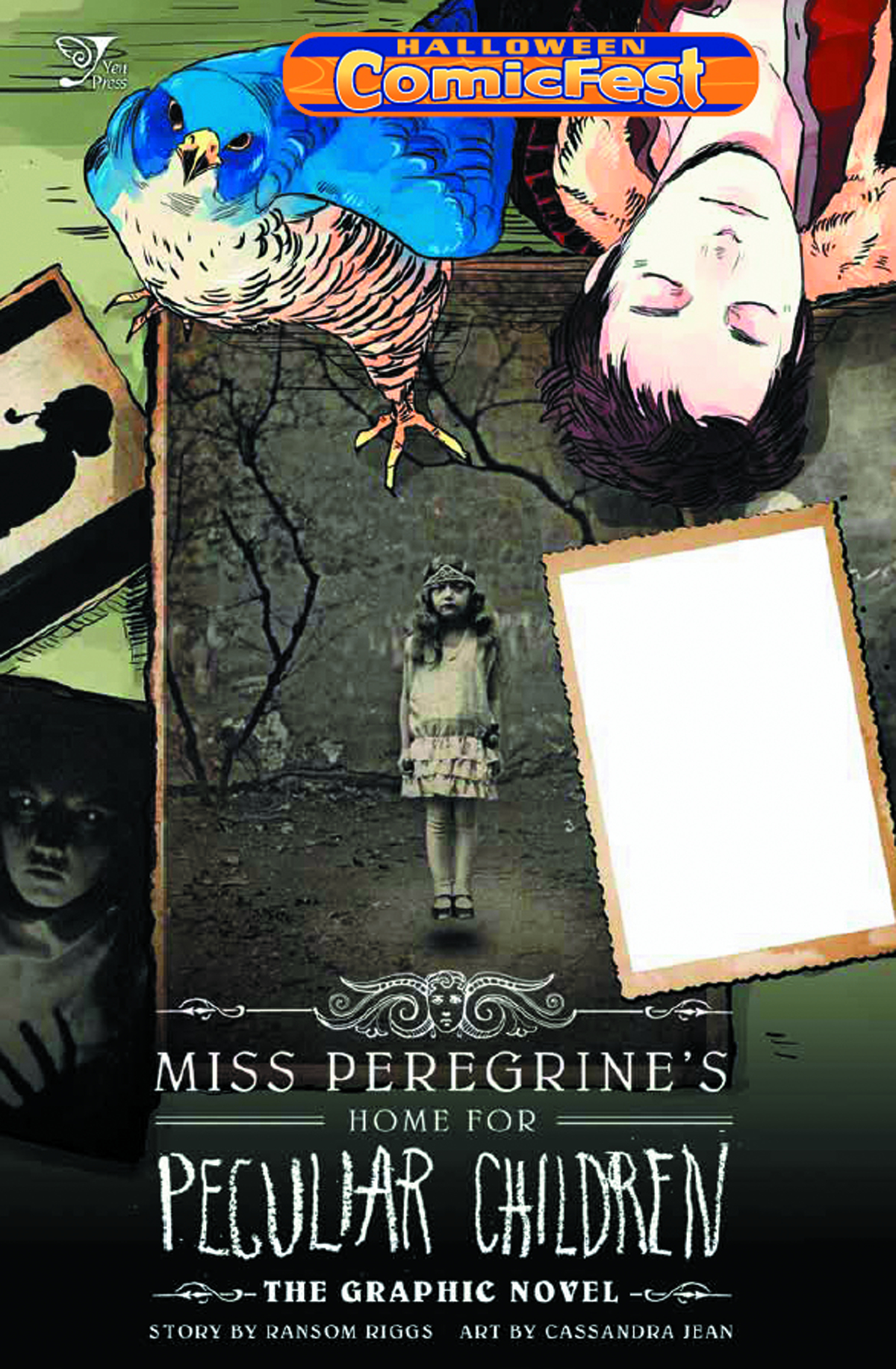
Miss Peregrine's Home for Peculiar Children: The Graphic Novel Halloween ComicFest Preview (Yen Press)
From 2013.
Adapted from the acclaimed novel by Ransom Riggs, which I haven't read, for a graphic novel released early this year, which I also have not read, this becomes my first real exposure to the 2011 book, which will be a movie in 2016 starring the increasingly ubiquitous Eva Green (who has also starred in comics-related 300: Rise of an Empire and Sin City: A Dame to Kill For). If this had originated as a Vertigo project, it would have fit in comfortably with Sandman and The Unwritten, a tale of a boy trying to reconcile the stories he used to hear from his grandfather which seemed too fantastic to be real, but as it turns out they were. The Halloween ComicFest freebies are the unheralded cousins to Free Comic Book Day. There are mini-comics (geared exclusively to kids) and also full-size releases like this one.
The Spectacular Spider-Man #229 (Marvel)
From 1995.
My earliest superheroes favorites were Robin and Spider-Man (two sides of the same coin, really). These were the days when I knew superheroes exclusively from their TV appearances, which meant I knew Burt Ward's Robin and Spider-Man and His Amazing Friends. By the time I started reading comics in the '90s, Tim Drake had become the third Robin, and...well, the Clone Saga was happening. Every major superhero had some kind of crisis during that decade. Superman was killed, Batman was broken, Green Lantern went insane, Wonder Woman was replaced. And Spider-Man underwent the most extreme existential crisis ever: Peter Parker met Ben Reilly, and for a time neither knew which one was the clone. It was a sprawling story that infuriated fans more than anything, mostly because it seemed the writers were, well, webslinging it as they went along. I always felt it was maybe not deserving of all the hate it received, but then, I also didn't read any of it. I was a DC guy by that point, had very little time for Marvel. I think in hindsight, the Clone Saga is a perfect embodiment of what Marvel was for decades, a company that told the kinds of one-and-done stories DC became known for in the Silver Age, filled with sensational misdirection as a matter of course (if you heard the term "life model decoy" when people were trying to figure out how Agent Coulson was alive at the start of Agents of S.H.I.E.L.D. despite his death in the preceding Avengers, you have a sense of what I'm talking about), the very idea of instant retcon with every new creative team. This issue is Peter Parker walking away from the whole mess (for a while), allowing Ben Reilly to assume the webbing as he tries to make sense of his ordinary life (again). In case you were wondering, Ben Reilly was definitely the clone. It's a whole era fans are still trying to remember positively, meaning its legacy in Spider-Man's history is still nowhere close to "Knightfall" or "Doomsday" despite the fact that Marvel itself keeps building off of it (to say nothing of the Ultimate Spider-Man version!).
Geoff Johns famously wrote into the letters column of Superboy, before he broke into comics, and offered his suggestion of the human DNA used to create Kon-El as having come from Lex Luthor. This was something he made reality a relative handful of years later in the pages of Teen Titans. Yet the best and subsequently undervalued work was done in the pages of Adventure Comics in what was also Johns' first collaboration with eventual Flash artist Francis Manapul, which led to the second Superboy ongoing series, written by Jeff Lemire. After the New 52 reboot literally rebooted the character, this was a whole era that was consigned to the history books when it ought to have ushered a renaissance of appreciation. This issue features a chilling version of Luthor, willing to do awful things to his own niece (another lost element, alas), one that trades heavily on his if-only-Superman-weren't-here self-mythology, and contrasts nicely with Johns' own Forever Evil version. For fans like me, T-Shirt Superboy will always come in second place to Don't Call Me Superboy despite what Johns brought to the character, but this is an exception that deserves greater recognition. Johns cleverly punctuated the arc with Superboy's running "What did Superman/does Lex Luthor do?" in the narration boxes, which I found instantly iconic, more relevant than what had been done with the character, outside of Johns and Karl Kesel, for years.
 |
| via Halloween ComicFest |
The Spectacular Spider-Man #229 (Marvel)
From 1995.
 |
| via SpiderFan |
Adventure Comics #6/509 (DC)
From 2010.
 |
| via Newkadia |
Subscribe to:
Posts (Atom)